
The DJI Air 3 is one of the most anticipated drones of the year, delivering a perfect blend of cutting-edge features, powerful dual-camera system, and extended flight performance. As DJI continues to dominate the drone market, the Air 3 positions itself as a versatile mid-range option, bridging the gap between consumer-friendly drones and professional-grade aerial equipment. In this detailed DJI Air 3 review, we explore its design, camera performance, flight capabilities, safety features, and overall value to help you decide if it’s the right drone for your needs.
Design And Build Quality
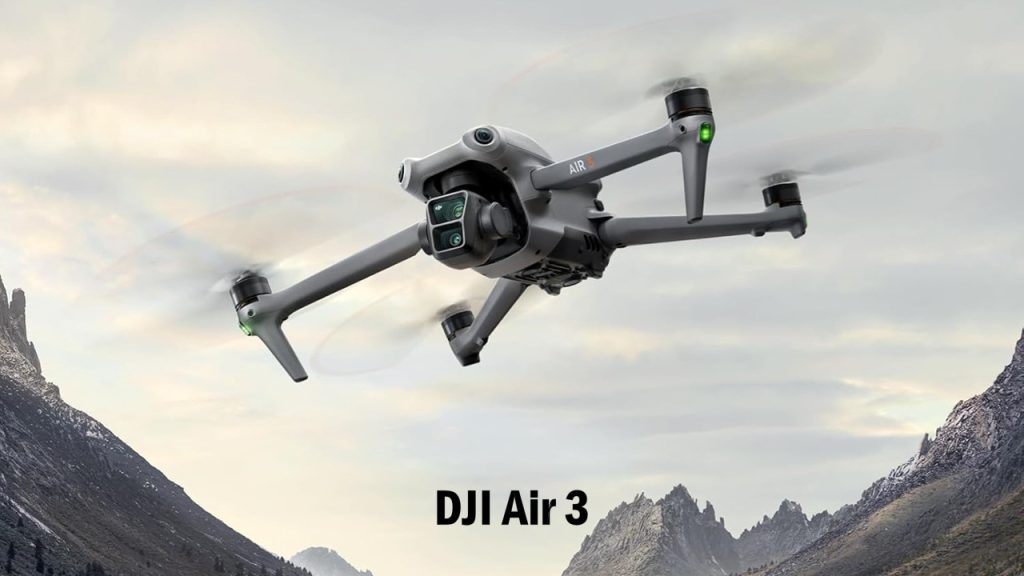
The DJI Air 3 showcases a sleek, aerodynamic design with a foldable body, making it compact and easy to transport. At 720 grams, it strikes a balance between portability and durability. The redesigned gimbal guard offers better protection during travel, while the robust build ensures stability even in windy conditions.
Key highlights of the design include:
- Foldable arms for easy storage in backpacks or travel cases.
- Matte finish with subtle DJI branding that feels premium.
- Improved cooling vents to prevent overheating during long flights.
- Ergonomic RC-N2 controller with enhanced signal stability.
The overall build quality feels solid, giving users confidence in both recreational and professional flying environments.
Dual-Camera System – Aerial Photography Revolution
The standout feature of the DJI Air 3 is its dual-camera setup, a first in the Air series. DJI integrates two high-quality cameras to expand creative possibilities:
Wide-Angle Camera:
-
- 24mm equivalent lens
- 1/1.3-inch CMOS sensor
- 48MP resolution
- Excellent for landscape shots, cityscapes, and detailed aerial photos.
3x Medium Telephoto Camera:
-
- 70mm equivalent lens
- 1/1.3-inch CMOS sensor
- 48MP resolution
- Perfect for portraits, wildlife, or cinematic shots with natural depth compression.
Both cameras support dual native ISO, producing stunning results in low-light conditions. The 4K/100fps slow-motion video and 10-bit D-Log M color profile allow creators to capture cinematic footage with incredible detail and dynamic range.
Video Capabilities
The DJI Air 3 is engineered to deliver professional-grade video performance:
- 5.4K at 30fps for maximum clarity.
- 4K up to 100fps for smooth slow-motion shots.
- 2.7K vertical shooting for social media content.
- 10-bit HLG and D-Log M color profiles for post-production flexibility.
Thanks to the dual-camera system, switching perspectives mid-flight becomes seamless, eliminating the need for lens swapping. This versatility makes the Air 3 ideal for travel filmmakers, vloggers, and professional videographers who want a portable but powerful drone.
Flight Performance And Controls
The DJI Air 3 offers exceptional flight performance powered by DJI’s advanced algorithms. Equipped with the O4 HD transmission system, it delivers 1080p video transmission up to 20 km, ensuring reliable signal strength.
Flight Specifications
- Max Flight Time: Up to 46 minutes per battery.
- Top Speed: 21 m/s (47 mph).
- Wind Resistance: Level 5 (up to 38 kph).
- Obstacle Avoidance: Omnidirectional sensors.
The drone responds smoothly to commands, with precise control via the RC-N2 or DJI RC 2 remote controller. Beginners benefit from intelligent flight modes, while advanced users can fully exploit its manual settings.
Intelligent Flight Modes
DJI has equipped the Air 3 with a range of AI-powered flight modes that enhance creativity and ease of use:
- FocusTrack: Automatically keeps your subject in frame with ActiveTrack, Spotlight, and Point of Interest.
- QuickShots: Pre-programmed cinematic shots like Dronie, Circle, Helix, Rocket, Boomerang, and Asteroid.
- MasterShots: Automatically creates professional-level videos with music and transitions.
- Waypoints: Plan complex flight paths for repeatable and cinematic shots.
These modes make the Air 3 a powerful storytelling tool for creators at all levels.
Safety Features
Safety is a top priority for DJI, and the Air 3 comes equipped with advanced collision-avoidance technology:
- Omnidirectional Obstacle Sensing: Cameras and sensors cover all directions to detect and avoid obstacles.
- APAS 5.0: Enables smooth rerouting around objects during flight.
- Return-to-Home (RTH): Automatically returns to the takeoff point if signal is lost or battery is low.
- Geo-fencing and No-Fly Zones: Ensures compliance with airspace regulations.
These features give both beginners and professionals peace of mind during every flight.
Battery Life And Charging
One of the strongest upgrades in the Air 3 is its longer battery life. Each Intelligent Flight Battery delivers up to 46 minutes of flight time, a significant improvement from previous Air models.
The DJI charging hub also introduces an innovative power transfer function, allowing you to consolidate remaining battery power into the battery with the highest charge. This ensures maximum efficiency when shooting on location.
DJI Air 3 vs. DJI Air 2S
For those considering an upgrade, here’s a quick comparison between the Air 3 and its predecessor, the Air 2S:
| Feature | DJI Air 2S | DJI Air 3 |
| Camera | 1-inch CMOS (20MP) | Dual 1/1.3-inch CMOS (48MP each) |
| Flight Time | 31 minutes | 46 minutes |
| Obstacle Avoidance | 4-directional | Omnidirectional |
| Transmission Range | 12 km (O3) | 20 km (O4) |
| Intelligent Modes | Standard set | Expanded (Waypoints, MasterShots, FocusTrack) |
The Air 3 clearly outperforms the Air 2S in almost every category, making it a worthwhile investment for serious creators.
Pricing And Value
The DJI Air 3 is available in multiple bundles:
- Standard Package (with RC-N2 controller): Approx. $$$$.
- DJI RC 2 Package (with built-in screen controller): Approx. $$$$.
- Fly More Combo: Includes extra batteries, charging hub, and carrying case. Approx. $$$$.
While it is priced higher than entry-level drones, the dual-camera system, extended flight time, and advanced features justify the cost. For those seeking professional-level performance in a compact drone, the Air 3 offers outstanding value.
Final Verdict
The DJI Air 3 sets a new benchmark in the mid-range drone category, offering a dual-camera system, longer flight times, superior safety features, and professional-grade video performance. It is an excellent choice for both enthusiasts who want to step up their aerial photography and professionals seeking a portable yet powerful drone solution.
If you’re looking for a drone that delivers cinematic quality, intelligent flight modes, and reliability in every condition, the DJI Air 3 should be at the top of your list.
FAQs
Q: Does the DJI Air 3 shoot vertical video?
Yes, the Air 3 supports 2.7K vertical shooting, making it ideal for TikTok, Instagram, and YouTube Shorts.
Q: How long does the DJI Air 3 battery last?
Each battery lasts up to 46 minutes, depending on flying conditions.
Q: Is the DJI Air 3 beginner-friendly?
Absolutely! With its safety sensors and intelligent modes, even beginners can fly confidently.
Q: How far can the DJI Air 3 fly?
The O4 transmission system supports a range of up to 20 km with 1080p live feed.
Q: Which is better: DJI Air 3 or DJI Mini 3 Pro?
If you want portability under 250g, go with the Mini 3 Pro. If you value dual cameras, longer flight time, and more pro features, the Air 3 is the better choice.